
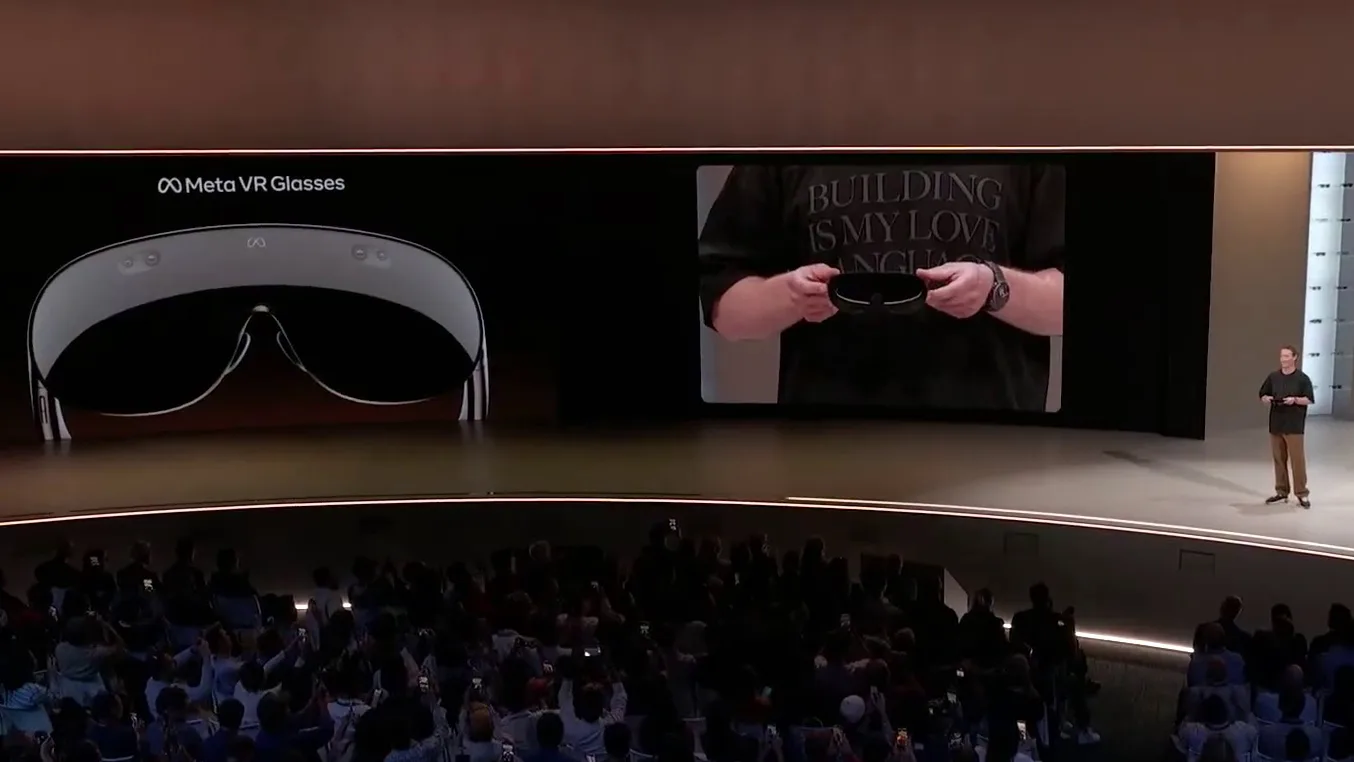

Meta has announced Meta VR Glasses, arriving in spring 2027 for $1,299 in the US. For us at immerNews, the interesting question is what this new design could mean for enjoying immersive photos and videos. A lighter device and micro-OLED displays sound promising. However, the much smaller field of view might impact the media experience.
We watched the announcement during Meta’s Connect keynote. These are our initial thoughts based on the announcement and reported specifications; we have not tested the VR glasses ourselves.
Cinema comes first
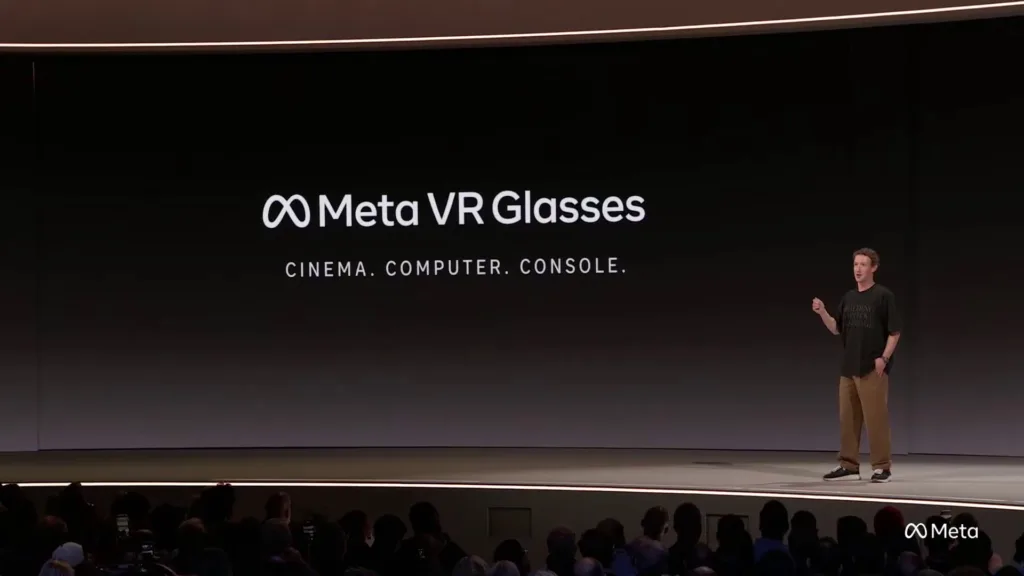
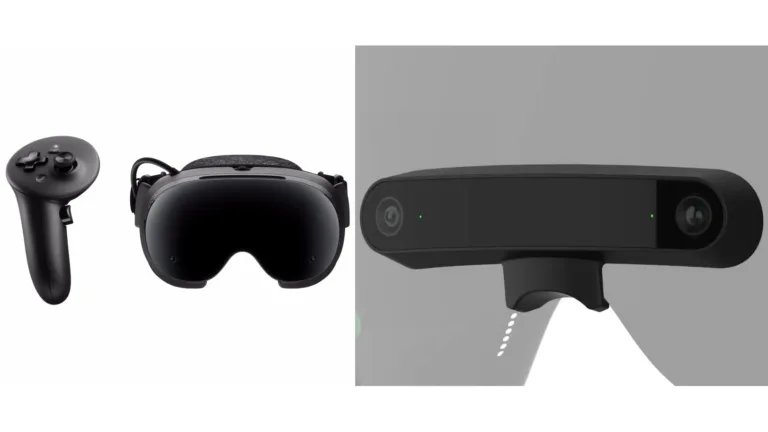
Mark Zuckerberg introduced the new Meta VR Glasses with the slogan “Cinema. Computer. Console.” The order has of course been carefully chosen and diverges from what we have seen in other Meta VR headsets. While so far gaming and the metaverse were apparently the largest focus which could be categorized under console, now cinema indicates the focus on media consumption. We are not surprised at it as we mentioned this trend from following various rumors in our article “Spatial Cameras in VR: From Quest 3 to Steam Frame + Arcturus, with Project Phoenix on the Horizon“. Based on these and our reported Unity OpenXR Meta changes, we already suggested that the next Meta device could potentially also be used as a better resolution spatial camera for capturing 3D photos and videos. While a specific spec on camera API access and resolutions is not public yet, we have confirmation of higher angular resolution for color passthrough which likely points to an improvement in using it as a 3D camera.
In the following, we take a closer look at the specs, compare them to other current VR headsets and discuss what this could mean for personal 3D photos, spatial videos, VR180 and large local media libraries.
Specifications and Comparisons
We checked the comparison against manufacturer documentation and firsthand reporting.
| Specification | Meta VR Glasses | Quest 3 | Steam Frame | XREAL Aura |
|---|---|---|---|---|
| Form factor | Glasses + compute puck | All-in-one headset | All-in-one headset | Glasses + compute puck |
| Display type | Micro-OLED | LCD | LCD | Sony micro-OLED |
| Pixels per eye | 2412 × 2288 | 2064 × 2208 | 2160 × 2160 | 1920 × 1200 |
| Refresh rate | Up to 120 Hz | Up to 120 Hz | 72–144 Hz; 144 experimental | Up to 120 Hz |
| Field of view, axes labelled | 70° H × 66° V D: 88° reported | 110° H × 96° V D: 113.3° rendered* | 110° H reported; V unknown | 70° D reported; H/V unknown |
| Display angular resolution | 37 PPD | 25 PPD | Unknown | Unknown |
| Chipset | Snapdragon Reality Elite (XR2 Gen 3) | Snapdragon XR2 Gen 2 | Snapdragon 8 Gen 3 | Snapdragon Reality Elite + XREAL X1S |
| RAM | 12 GB | 8 GB | 16 GB | 12 GB / 16 GB |
| Operating system | Meta Horizon OS | Meta Horizon OS | SteamOS 3 | Android XR |
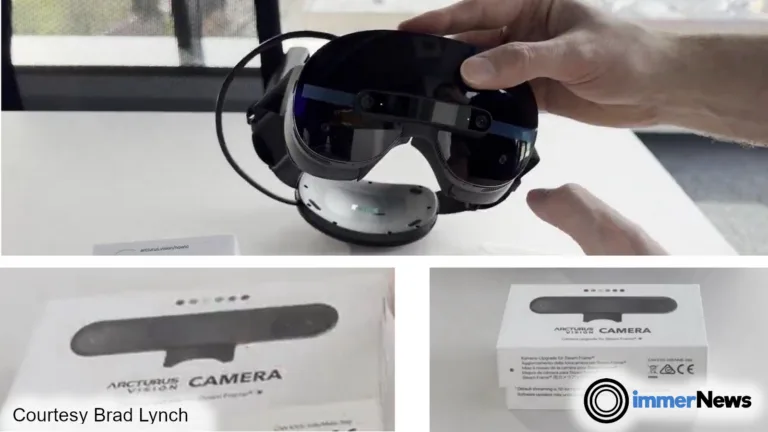
| View of the real world | Color camera passthrough, 26 PPD | Color camera passthrough, 18 PPD | Monochrome camera passthrough or add-on Arcturus Vision Camera | Optical see-through; camera PPD not applicable |
| Hand tracking | Yes | Yes | No | Yes |
| Eye tracking | Yes; 4 cameras reported | No | Yes; 2 cameras | No, per hands-on reporting |
| Face tracking | Yes, reported by UploadVR | No | No | Unknown |
| Bundled tracked controllers | No; Touch Plus sold separately | Yes; Touch Plus | Yes; Steam Frame controllers | None announced; hands, voice and puck input |
| Internal storage | 128 GB, reported | 512 GB | 256 GB / 1 TB | 256 GB / 512 GB |
| microSD slot | Yes; up to 1 TB reported | No | Yes | Unknown |
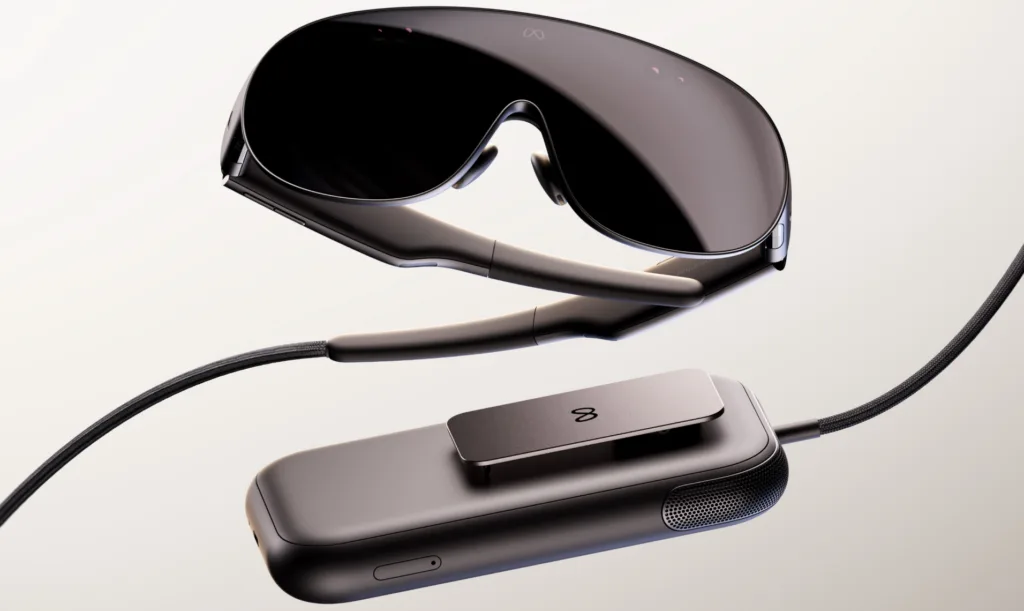
| Weight worn on the head | About 100 g, excluding puck | 515 g | 440 g with head strap | About 95 g reported, excluding puck |
| Native DisplayPort input | Yes, on puck | No | Unknown | Yes, on puck |
| US price | $1,299; 128 GB | About $600; 512 GB | $1,059; 256 GB | Exact price unannounced; base model ≤$1,500 before tax |
Sources: Meta developer comparison, Meta FoV documentation, Meta Newsroom, Quest 3 specifications, Valve and XREAL. Additional reporting: David Heaney / UploadVR, Valens Quinn / GadgetGuy, Road to VR (Meta VR Glasses; Steam Frame), Tom’s Hardware, The Ghost Howls and PhoneArena. Aura comparison credit: u/d4v1dtsh on r/Xreal.
* https://risa2000.github.io/hmdgdb/hmd_cfgs/MetaQuest3_Native_R72.html
In terms of pixels on the display, what does that actually mean if we compare Meta VR glasses with Quest 3 and XREAL Aura?
| Device | Resolution per eye | Total pixels per eye | Meta VR Glasses have… |
|---|---|---|---|
| Meta VR Glasses | 2412 × 2288 | 5,518,656 | Reference |
| Quest 3 | 2064 × 2208 | 4,557,312 | 1.21× as many pixels |
| XREAL Aura | 1920 × 1200 | 2,304,000 | 2.40× as many pixels |
Micro-OLED for media consumption
Early VR users had the pleasure of OLED on VR headsets such as HTC Vive or the first Meta Quest. The next generations of Meta’s headsets used LCD panels, which are usually cheaper and brighter. Some OLED headsets can show issues such as smearing during motion and mura (uneven brightness or color across the display). I noticed mura on HTC Vive and PSVR 2. Mura is not exclusive to OLED, though. However, the black levels are often shown in darker gray and the colors appear not as saturated on LCDs. For media fans, OLED and micro-OLED (the difference is in short: micro-OLED uses a silicon backplane, allowing very small, densely packed pixels in a compact display) are often desired. Now, with Meta VR Glasses, we are getting a new device with micro-OLED displays, possibly leading to deeper blacks and richer-looking colors. This can matter a lot in dark film scenes and also in dark virtual cinema environments.
The increased display resolution we showed in the table above also helps a lot. With 2412 × 2288 pixels per eye, we have 21.1% more panel pixels than Quest 3 and 139.5% more than XREAL Aura. However, the field of view is also different, which we discuss next.
How a smaller field of view affects immersive media
Moving on from Quest 3 with a horizontal field of view of 110° to 70° in the Meta VR glasses will affect different kinds of media differently. It shall be noted that the real field of view might change slightly with the eye relief distance, different covers, wearing glasses and human eye shape. The following preferred values are from my subjective experience in immerGallery where e.g. for 3D cylindrically curved images, I can read from the menu the number of degrees the virtual display screen covers.
- Regular 2D or 3D movies such as cinema 3D movies: Curved screen size values going from 50 to 70° are usually fine. During a longer movie, as a spectator, it can be exhausting rotating the head too much, e.g. watching the faces in a dialogue of a person on the left with a person on the right. So a smaller size downwards to 50° is fine while I personally prefer something closer to 70°. According to my experience with immerGallery on Quest 3, I expect the increased angular display resolution will help make watching 4K movies look sharper. For 1080p movies at these virtual screen sizes, I do not expect any visible sharpness benefit from the higher display resolution. In my experience, Quest 3’s displays are already sufficient for this content.
- 3D photos: For some 3D photos like images from the XREAL Beam Pro camera, I prefer watching these on an 80° curved stereoscopic cinema screen. That way, the image covers a large amount from the leftmost to rightmost area in the image when I look into the center. This also helps as various 3D cameras do not automatically crop 3D images regarding their side-border areas: Because the left lens and right lens of a 3D camera are physically differently located, in the left eye view, some content to the rightmost part of that image will be missing and vice-versa for the other view. Free tools such as Stereo Photo Maker Pro can to some degree fix that with their auto-align feature, but not everyone uses this and sometimes there might be a reason to preserve the original content. Having such content displayed very wide, the potential issues at the leftmost and rightmost part of the image are barely an issue when mostly looking into the inner regions of the image. This applies to some degree to self-captured 3D videos as well.
- Wide-angle panoramas: Finally with VR, a great opportunity came up on how to watch the wide-angle panoramas that can be created by sliding the phone in one direction and it continues to capture that in a high-resolution image. Seeing this in a wide field of view with high detail gives great immersion. A limited 70° FoV will likely reduce that impressive view and immersion. However, the higher angular display resolution, depending on the content, could provide more sharpness.
- Spherical media (VR180, 360°): This will be the most impacted area by a lower field of view. As I have been showing such spherical media to various people on Quest 3, some of the feedback includes that it still feels like looking through binoculars. The statement makes sense when looking at the human’s full field of view, e.g. mentioned in my paper “Concept for Rendering Optimizations for Full Human Field of View HMDs“: The full human field of view for both eyes together has been measured to be between 200 and 220 degrees. Without trying the new Meta device and seeing the difference ourselves, it is hard to judge the difference. However, it could fall beyond a threshold where VR180-3D, in my opinion the most immersive media format making you feel like being transported into the scene, might not unfold its magic anymore or to a lesser degree. With my experience in immerGallery on Quest 3, I expect the increased angular display resolution to not make 8K spherical content look sharper. However, VR180 photos with sensitive AI upscaling keeping stereoscopic details correct might benefit from more perceived sharpness. We will have a separate article about upscaling VR180 photos in the future.
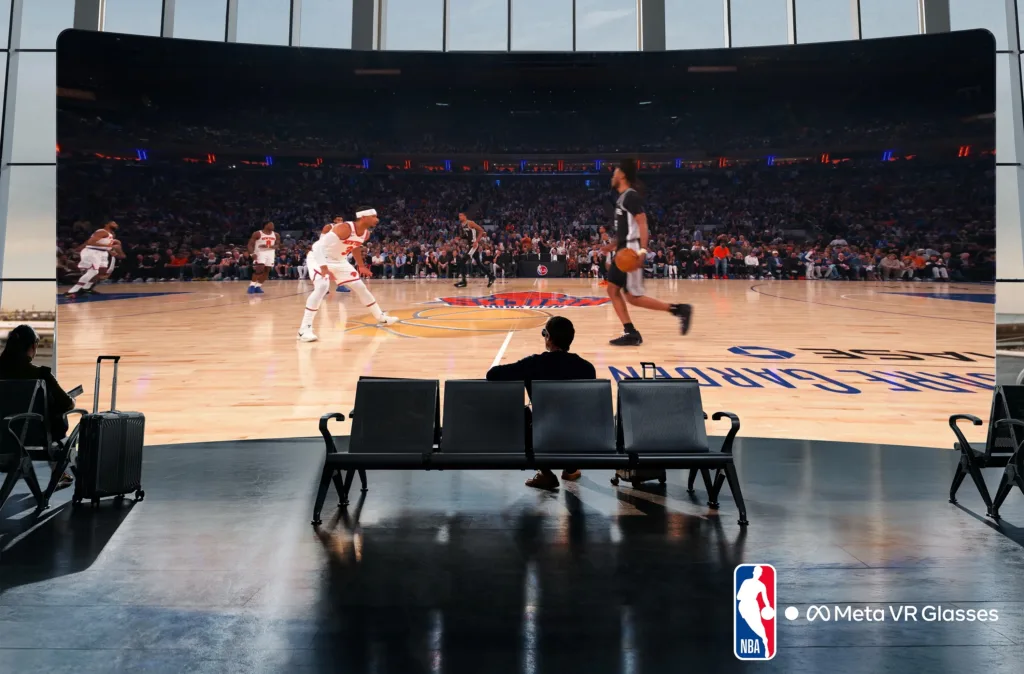
Meta also announced plans for immersive sports content with ESPN, offering 8K streaming and 180-degree views. This starts with college football on Meta Quest in 2026, with more sports coming in 2027. This makes the field-of-view discussion relevant to Meta’s own content plans as well.
The other impact on immersion besides the direct field of view is distraction in the periphery. The open sides of the Meta VR Glasses could contribute to that. However, we learned that light blockers will be sold as accessories which would mitigate this.
It shall also be noted that sometimes less immersion can also be better. Specifically for beginners in VR, fully immersive experiences, including VR180/360 movies in which the camera is moving, can quickly lead to motion sickness. If this happens to people trying VR, they might be more inclined to fully abandon VR to not repeat the unpleasant experience.
Video decoding is still specified at 8K60
Despite the new processor, Qualcomm’s official product brief still lists 8K video decoding at 60 fps for Snapdragon Reality Elite (XR2 Gen 3). This matches the published specification for the Snapdragon XR2 Gen 2 used in Quest 3. Decoding 8K video at 90 or 120 fps is not specified.
Apple Immersive Video provides an interesting comparison: Apple’s recommended delivery format uses 4320 × 4320 pixels per eye at 90 fps, encoded using MV-HEVC. Based on the published specifications of the Qualcomm chip, we would therefore not expect smooth playback of such Apple Immersive videos at their full resolution and 90 fps on Meta VR Glasses, even if the files could be transferred there.
Around 100 grams on your face, with the rest in a puck
With the design that offloads battery, compute and storage to a cable-connected puck, fast moving in games might become a bit more tedious. However, for media consumption mostly done on the couch, this should not present a bigger issue. Lighter weight on the head and face should benefit and enable a better experience that can be done for a longer time. But it should be noted that the pure number of weight is not the only factor impacting the comfort. Weight balance, whether it presses on the nose and if the cable pulls when turning your head or reclining on a couch need to be considered as well.
microSD is welcome, but 128 GB internal storage is tight
The reported 128 GB of internal storage is tight. Some of this space is already consumed by the operating system and some pre-installed apps. In the past, Meta Horizon OS has also included apps which could not be uninstalled and continued to consume space. For operating systems, it is also not surprising if over the years with more updates they increase in size. While movies and photo collections can be offloaded to a microSD which is supported with up to 1 TB on Meta VR Glasses, it is still not ideal. Depending on which microSD card is used, the speed can be noticeably slower compared to fast built-in storage. For movie playback and image watching this will very likely be fine. But apps should for fast startup ideally stay on built-in storage. It is also not clear yet whether apps could even be transferred to the microSD card or if it can only be used for data storage. Offering models with more internal storage, at least 256 GB, would have been desirable from a user’s perspective.
Better passthrough does not yet tell us the camera resolution
As mentioned above, passthrough angular resolution increases from 18 PPD on Quest 3 to 26 PPD on Meta VR Glasses. This is about 44% higher angular pixel density. As discussed in our earlier article on spatial cameras in VR, based on our own capture tests, Quest 3 can provide camera imagery at 1920 × 1920 pixels per eye. But when using it as a 3D camera through the Meta Passthrough Camera API, the maximum resolution of 1280 × 1280 pixels was exposed. The higher passthrough PPD figure does not yet tell us the native camera resolution or which resolutions will be exposed to developers through the APIs. This is also dependent on the camera field of view, cropping and processing. However, we are of course hoping and somewhat expecting that the resolution available to apps will be higher than on Quest 3.
Three hours of media playback sounds promising
As for the battery life, Meta claims up to three hours of continuous high-resolution media playback. That is a great value and allows watching 1-2 full movies at usual movie length. We will need to see if these numbers will only come true for certain types of videos, codecs, brightness settings and media player viewing apps. Generally, this sounds like a very good value, specifically compared to the recently released Steam Frame which in our media test was only able to go a bit longer than one hour, starting with a full battery. It shall be noted that in the current Steam Frame setup with the used Android/Lepton layer, video hardware decoding was not available. If it becomes available in a future update, the battery time would likely be longer. However, the longest usage we got reported there from streaming games from a PC to the headset was around 1:30h. Valve also works on a strap with hot-swappable batteries which would likely help.
Optional controllers: will immerGallery work on Meta VR Glasses?
As we said before, “console”, which hints at games, was mentioned last in Meta’s slogan for Meta VR Glasses: Cinema. Computer. Console.
As part of this, VR controllers are fully supported by this headset, but need to be purchased separately or reused from Quest 3 / 3S. Besides trying to make the price of the headset cheaper, this might come also from a perception in which VR controllers are sometimes framed as being inconvenient. However, 6-DoF controllers are efficient input devices allowing a lot of complex actions such as selecting multiple objects, grabbing, quickly clicking various buttons and executing special functions. Thanks to their vibration motors, haptic effects and feedback can be given. Compared to that, hand tracking input can sometimes feel slow, can have a higher rate of incorrectly interpreted inputs and has no haptic feedback.
For choosing a movie, pausing playback or browsing photos, leaving controllers aside can be convenient. That is why in immerGallery 1.4.5, we introduced hand tracking support. All features can be used without controllers on Quest 3 and Quest 3S.
Hand tracking in immerGallery 1.4.5. All features can be used without controllers on Quest 3 and Quest 3S. Video: immerVR.
However, more complex interactions like quickly marking images to be cut and pasted into another folder, clicking through various folder hierarchies, typing a message in our Help menu with the virtual keyboard, these all work faster and more reliably with VR controllers.
Now for developers, and specifically games, the impact of not bundling controllers is large. They cannot rely on the user owning a VR controller for their software. If they release an app with controller-only support, the potential target audience on Meta VR Glasses will be much smaller. Some games also just cannot be ported to a hand input scheme. That limits for developers the possible audience and market. Possibly a reason why many existing VR apps and games using VR controllers have not been ported from Quest to Apple Vision Pro or Samsung Galaxy XR, both shipping without controllers.
It is still great that Meta fully supports the VR controllers, but it might have been nice to force a bundle of this for the app/game ecosystem. In any case, because controllers are supported, Meta was able to announce on stage that all apps and games from Quest will also run on the Meta VR Glasses: “We also support the entire Quest library with optionally attached controllers”.
This also means of course that our immerGallery app will work as well, with and without VR controllers. We will likely make after release a few tweaks to optimize for the device, but generally everything should work pretty well from the moment the new device reaches its first users.
A premium price could bring a different audience
Meta already stated that the new device is a new category and it will co-exist with the existing Quest 3 with the larger field of view. Meta VR Glasses also sit in a different price category from Quest 3: $1,299 compared to about $599. Business Insider previously reported that Meta was planning higher prices for future VR devices. From our perspective as the team behind immerGallery, the interesting possibility is an audience that regularly uses immersive media and values software built for it. A premium device could help reach that audience, but a higher entry price can also mean fewer customers.
Conclusion
The new Meta VR Glasses are from what we have seen in the keynote a possible disruption in the market. The device offers at least a reasonably wide field-of-view, even though not as large as Quest 3, at a very light weight and without looking like a brick mounted to the face. That nicer form factor might spark the interest of many more customers for VR – even though many might be held back by the price. Having optional VR controller support and the ability to run all Quest 3 apps is a great start for users to find a variety of apps and games on day 1.
For regular 2D and 3D media, the new light form factor and OLED displays may deliver a superior experience even at the narrower field of view compared to Quest 3. For spherical media (VR180, 360°), it remains to be seen how intense the immersion will be with the smaller field of view.
As Quest 3 will still co-exist as a larger field-of-view headset, this is overall great progress in the VR space, giving users more options to choose from.
A question for discussions in the comments:
Would it have been better if Meta released only Meta VR Glasses with 256 GB (instead of 128 GB) and force-bundled controllers for $1,399 instead of $1,299, a 7.7% higher price?
Vielen Dank, für den interessanten Artikel. Was erwarten sie von der Haltbarkeit des Gehäuses? Dass der Preis des Headsets nicht im dreistellignen Bereich liegt, könnte auch auch Problem für dessen weitreichende Adaption darstellen. Was denken sie darüber?
Vielen Dank für das Feedback und den Kommentar! Die Frage nach der Haltbarkeit und Robustheit des deutlich schlankeren und leichteren Gehäuses der Meta VR Glasses ist natürlich berechtigt. Die bisherigen, klobigeren VR-Headsets sind meiner Erfahrung nach meist recht robust. Allerdings ist mir auch bei festen Kopfhalterungen (Hard Straps) schon öfter das Plastik gerissen, sodass ich die Halterung austauschen musste. Ohne echte Praxiserfahrung lässt sich die Haltbarkeit der Meta VR Glasses noch nicht zuverlässig einschätzen.
Der vierstellige Preis ist natürlich eine Hürde, wie auch im Artikel angesprochen. Er könnte im Vergleich zu den günstigeren Modellen Quest 3 und Quest 3S zu weniger Verkäufen führen, und damit auch zu einer kleineren potenziellen Zielgruppe für Apps und Spiele auf dem neuen Gerät. Wie sich das tatsächlich entwickelt, werden wir nach dem Marktstart im Frühjahr 2027 beobachten müssen.
Just in case also in English for other readers:
Thank you for the feedback and your comment! The question about the durability and robustness of the much slimmer and lighter Meta VR Glasses housing is certainly valid. In my experience, existing, bulkier VR headsets are generally quite robust. However, I have had the plastic on rigid head straps crack several times, requiring a replacement. Without hands-on experience, it is too early to reliably assess the durability of Meta VR Glasses.
The four-figure price is certainly a barrier, as discussed in the article. It could lead to fewer sales compared with the more affordable Quest 3 and Quest 3S, and consequently a smaller potential audience for apps and games on the new device. We will have to see how this develops after the launch in spring 2027.
Whenever I see such new devices, I am wondering, if they are worth the money. I am still using the Google cardboard, as it is by far the best cost effective device I have found for my applications.
The price for Meta VR Glasses is definitely painful for many people. But this leading edge technology (compact lightweight HMDs) is expensive. Micro-OLED displays with 2Kx2K resolution are still the most pricey components, going for at least $300 dollars a piece. You add fancy pancake optical stacks and you are already half way through the final price.
It all depends on what you want to use it for. Those are an overkill for flat content viewing. Spatial and immersive media playback may be worth it, especially on those mOLED juicy screens.
As much as I like Google Cardboard, I stopped using it when Xreal Air glasses became available for less than $200 (they also have mOLED screens, but only with FHD/eye resolution).